Student Data Privacy for Coaching Classes: What the DPDP Act Means for You
Coaching centres hold names, phone numbers and marks of children. Understand the basics of India's DPDP Act and simple habits that keep student data safe.
A coaching centre knows a lot about its students: names, phone numbers, school, marks, attendance, and sometimes photos and addresses. Much of this belongs to children. India's Digital Personal Data Protection Act (DPDP Act), 2023, sets rules for how such personal data should be handled. This article gives a plain-language overview. It is not legal advice, and the rules are being introduced in phases, so please check current requirements or speak to a lawyer for your centre.
Why this matters to a small centre
The law applies to organisations of all sizes that handle personal data. Even a single-branch tuition class collects personal information every day. Beyond legal duty, parents trust you with their child's details, and one data leak can damage that trust for years.
Key ideas in simple words
- Consent: collect data for a clear purpose and tell people what you will do with it.
- Children's data: for children, parental consent is generally needed, and data about children should not be used to track their behaviour or show them ads.
- Purpose limits: use data only for what you said, such as attendance, results and fee records.
- Security: take reasonable steps to protect data from loss or misuse.
- Rights: people can ask to see, correct or delete their data.
- Breach: if data is leaked, you may have to inform the people affected and the authority.
Practical habits to start now
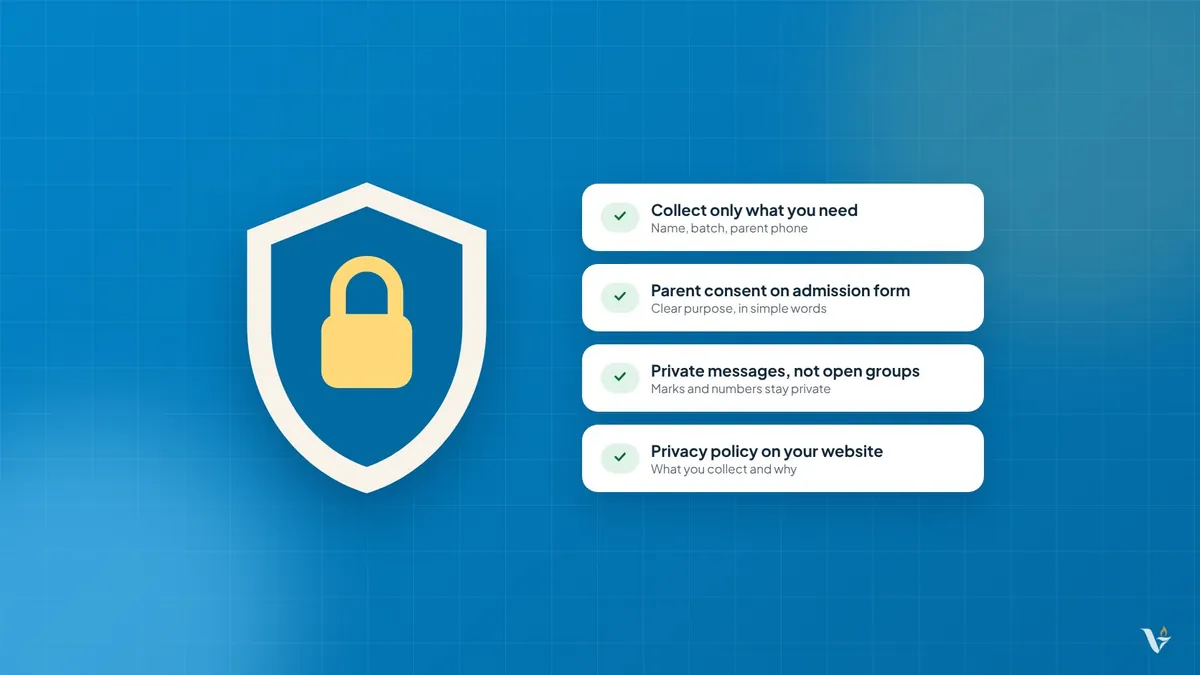
- Collect only what you need. Do you really need a student's full home address?
- Add a consent line on your admission form. For example: "I agree that the centre may use my child's details for attendance, tests, fees and communication."
- Stop sharing marks and phone numbers in open WhatsApp groups. Send private messages to each parent.
- Use separate logins. Teachers should see only their batches.
- Do not keep data forever. Delete or archive records of students who left long ago, as your policy allows.
- Keep a privacy policy. Explain in simple language what you collect and why.
- Back up safely. Store backups in a secure place, not on a shared personal phone.
Paper registers are also data
A register left on a desk, or marks pinned on a notice board with phone numbers, is also personal data. Treat paper with the same care as digital files.
Choose software that respects privacy
When you pick a tool, ask where data is stored, who can access it, and how deletion requests are handled.
How Vidhyantu helps
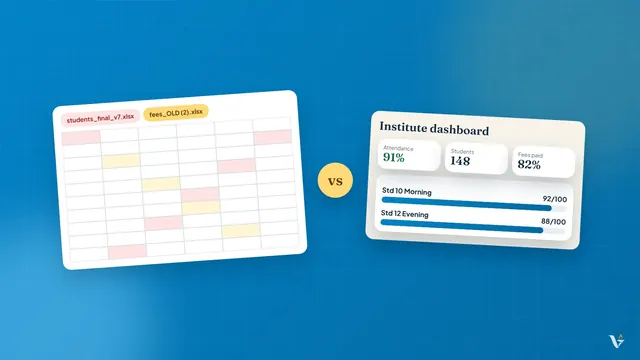
Vidhyantu contacts parents through private message alerts instead of public groups, keeps student records in one place instead of loose registers and files, and publishes a privacy policy that explains how data is collected, used and protected.
Want this for your centre? Talk to us on WhatsApp or fill the form at vidhyantu.com. Vidhyantu costs ₹6,000 per year for unlimited students.